
AI tool integration without workflow disruption is defined as the practice of adding AI capabilities to existing systems using modular architecture, shadow deployment, and API abstraction layers, without halting or degrading live operations. Development teams that follow this approach avoid the productivity stalls that plague rip-and-replace upgrades. Shadow deployment strategies reduce operational downtime by 73% compared to full system overhauls. That number reflects a fundamental shift in how teams should think about AI adoption: not as a replacement event, but as a progressive enhancement layered onto what already works.
What prerequisites are essential for non-disruptive AI integration?
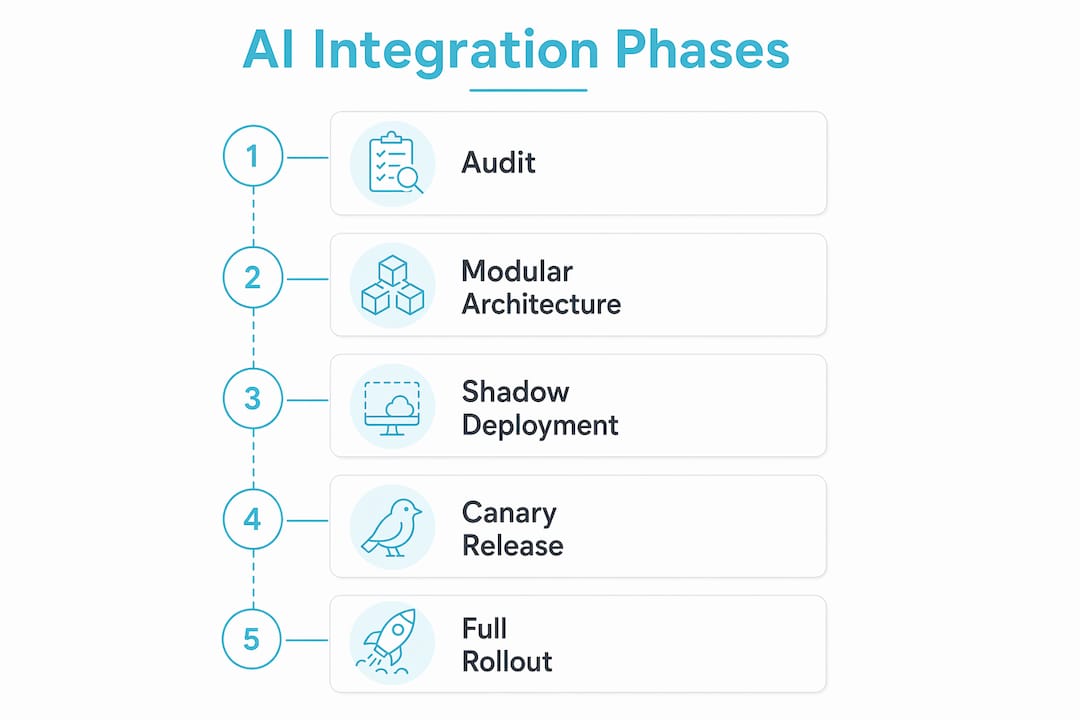
The first step in any non-disruptive AI integration is a pre-integration audit. Teams need a clear map of which processes are manual, repetitive, and time-consuming before a single line of AI code gets written. Focusing AI pilots on repetitive tasks consuming 20% or more of team time maximizes return on investment and keeps the scope contained. A contained scope means fewer systems touched, fewer failure points, and faster rollback if something goes wrong.
Architecture choices made before integration determine everything that follows. Modular microservices architecture and abstraction layers let teams add AI logic without touching core business logic. API integration layers using standards like Model Context Protocol (MCP) transform complex AI integration into configuration-based processes, reducing the risk of brittle systems. An API-first strategy also means you can swap AI providers without rewriting your application.

Authentication is a prerequisite teams consistently underestimate. OAuth Protected Resource Metadata (PRM) per RFC 9728 enables secure, standardized authentication for AI agents accessing enterprise data. Standardized authentication eliminates manual token management and the workflow breaks that come with it.
| Prerequisite | What it does |
|---|---|
| Pre-integration audit | Identifies high-impact manual tasks consuming 20%+ team time |
| Modular microservices | Isolates AI logic from core business systems |
| MCP abstraction layer | Converts AI tool connections into configuration, not code |
| OAuth PRM (RFC 9728) | Standardizes agent authentication across enterprise data sources |
| Feature flags | Enables instant rollback without a deployment cycle |
How do you execute AI integration using shadow deployment?
Shadow deployment is the industry's gold standard for non-disruptive AI rollout. The mechanism is specific: production traffic gets duplicated and sent to the candidate AI agent, but only the existing system's response reaches the user. Shadow deployment involves duplicating production traffic to a candidate agent, enabling internal testing without any user impact. Teams observe how the new agent behaves under real load before it touches a single live user.
The shadow phase has a defined minimum threshold before you move forward:
- Run the shadow agent against at least 1,000 production requests or five full days of traffic, whichever comes later.
- Begin canary release at 5% of live traffic while monitoring CSAT scores, error rates, and escalation rates continuously.
- Increase traffic to 10%, then 25%, pausing at each step to confirm KPIs hold within acceptable bounds.
- Gate full rollout behind a feature flag so any regression triggers an instant, zero-downtime rollback.
- Decommission the shadow agent only after the full rollout has been stable for a defined observation window.
Isolating AI logic in a dedicated module or API gateway is what makes this process repeatable. Centralizing AI calls allows instant model and provider swaps without changing business logic. That means when you move from shadow to canary to full production, the only variable changing is traffic percentage, not architecture.
Pro Tip: During shadow deployments, give shadow agents identical tool permissions and system contexts as production agents. Mismatched permissions create noisy divergence metrics that look like model failures but are actually configuration errors.
| Deployment phase | Traffic percentage | Minimum duration |
|---|---|---|
| Shadow mode | 0% (duplicated only) | 1,000 requests or 5 days |
| Canary phase 1 | 5% | Until KPIs stabilize |
| Canary phase 2 | 10–25% | Continuous monitoring |
| Full rollout | 100% | Post-rollout observation window |
What are the common challenges in AI integration without process interference?
The most common mistake teams make is treating AI integration as a platform upgrade. Monolithic upgrades require system-wide freezes, extended testing windows, and high-risk cutovers. Isolating AI logic in a dedicated service or module eliminates that risk entirely. The AI feature lives in its own boundary, and the rest of the system never knows it exists until the feature flag opens.
Authentication failures are the second most frequent cause of integration breakdowns. Teams that rely on custom token flows create brittle integrations that break when credentials rotate or API versions change. OAuth PRM implementation using RFC 9728 standardizes AI agent data source authentication, preventing those brittle custom flows from forming in the first place.
AI model downtime is not a question of if but when. Every production AI integration needs resilience patterns built in from day one:
- Retry with exponential backoff: Retries failed requests with increasing wait intervals to avoid hammering a degraded service.
- Circuit breakers: Stop sending requests to a failing AI service after a threshold, preventing cascade failures.
- Fallback chains: Route requests to a secondary model or a deterministic fallback when the primary agent fails.
- Graceful degradation: Return a reduced but functional response rather than an error when AI is unavailable.
Resilience patterns like retry, fallback chains, and circuit breakers keep AI features functional during failures. Teams that skip this step discover the gap the hard way, usually during peak traffic.
Scattered AI calls across a codebase are the silent killer of integration stability. Centralizing AI logic into a single gateway enables fallback routing, retry policies, and cost tracking transparently to the main application. Every AI call that bypasses the gateway is a failure point you cannot monitor or control.
Pro Tip: Treat your AI gateway the same way you treat a database connection pool. Centralize it, monitor it, and never let individual services call AI endpoints directly.
For broader organizational adoption patterns, AI team update strategies in 2026 consistently point to centralized governance as the factor that separates successful rollouts from chaotic ones.
How can teams measure and validate AI integration success?
Validation is not a one-time gate. It runs continuously from the first shadow request through full production rollout. The metrics that matter most during shadow and canary phases are CSAT scores, escalation rates, and error rates. These three indicators tell you whether the AI agent is helping users, hurting them, or simply failing silently.
Real production traffic is the only valid test environment. Synthetic staging data misses edge cases, rare query patterns, and the load distribution that only real users generate. Monitoring comparative divergence metrics between production and shadow agents prevents degraded user experiences from reaching customers. Divergence metrics compare what the shadow agent would have done against what the production system actually did, flagging regressions before they go live.
The validation sequence for scaling from pilot to organization-wide deployment follows a clear structure:
- Confirm shadow phase metrics show no significant divergence from production baselines.
- Validate canary phase CSAT and error rates against pre-integration benchmarks at each traffic increment.
- Document rollback procedures and test them before expanding beyond 25% traffic.
- Run a post-rollout observation window of at least one full business cycle before declaring the integration stable.
- Establish ongoing monitoring dashboards that track AI feature performance separately from general application health.
Short development cycles of 4–8 weeks for initial AI feature deployment keep changes reversible and low-risk. Shorter cycles mean faster feedback, smaller blast radius on failures, and a team that builds confidence incrementally rather than betting everything on a single big launch.
Key Takeaways
Non-disruptive AI integration succeeds when teams combine modular architecture, shadow deployment, standardized authentication, and continuous metric validation before expanding to full production traffic.
| Point | Details |
|---|---|
| Start with an audit | Target repetitive tasks consuming 20%+ of team time before writing any AI code. |
| Use shadow deployment | Run at least 1,000 requests or 5 days of parallel traffic before any canary release. |
| Centralize AI logic | A single AI gateway enables fallback routing, retries, and cost tracking without touching business logic. |
| Standardize authentication | OAuth PRM per RFC 9728 prevents brittle token flows and authentication-related workflow breaks. |
| Validate with real traffic | Divergence metrics between shadow and production agents are the most reliable readiness signal. |
What I've learned from real AI integration deployments
The teams that struggle most with AI integration share one belief: that adding AI means rebuilding something. That belief is wrong, and it's expensive. Every successful integration I've seen treated AI as a modular add-on, not a system replacement. The existing codebase stays intact. The AI feature lives behind a feature flag in its own service boundary. Nothing breaks because nothing fundamental changed.
Shadow deployment is not just a best practice. It's the only responsible way to validate an AI agent against production behavior. Staging environments lie. They don't have the query diversity, the load patterns, or the edge cases that real users generate daily. Real traffic testing is the only honest signal you have.
The mindset shift that matters most is this: AI is progressive enhancement, not a migration event. Teams that internalize that idea move faster, break less, and build more trust with stakeholders. Patience during phased rollouts is not a weakness. It's what separates a stable production deployment from an incident report.
Resilient design is not optional. Every AI feature will fail at some point. The teams that plan for failure with circuit breakers, fallback chains, and graceful degradation are the ones whose users never notice when it happens.
— Ben
Agentcohort: a modular workspace built for this exact problem
Development teams that want to put these principles into practice without building the infrastructure from scratch have a direct path forward with Agentcohort.
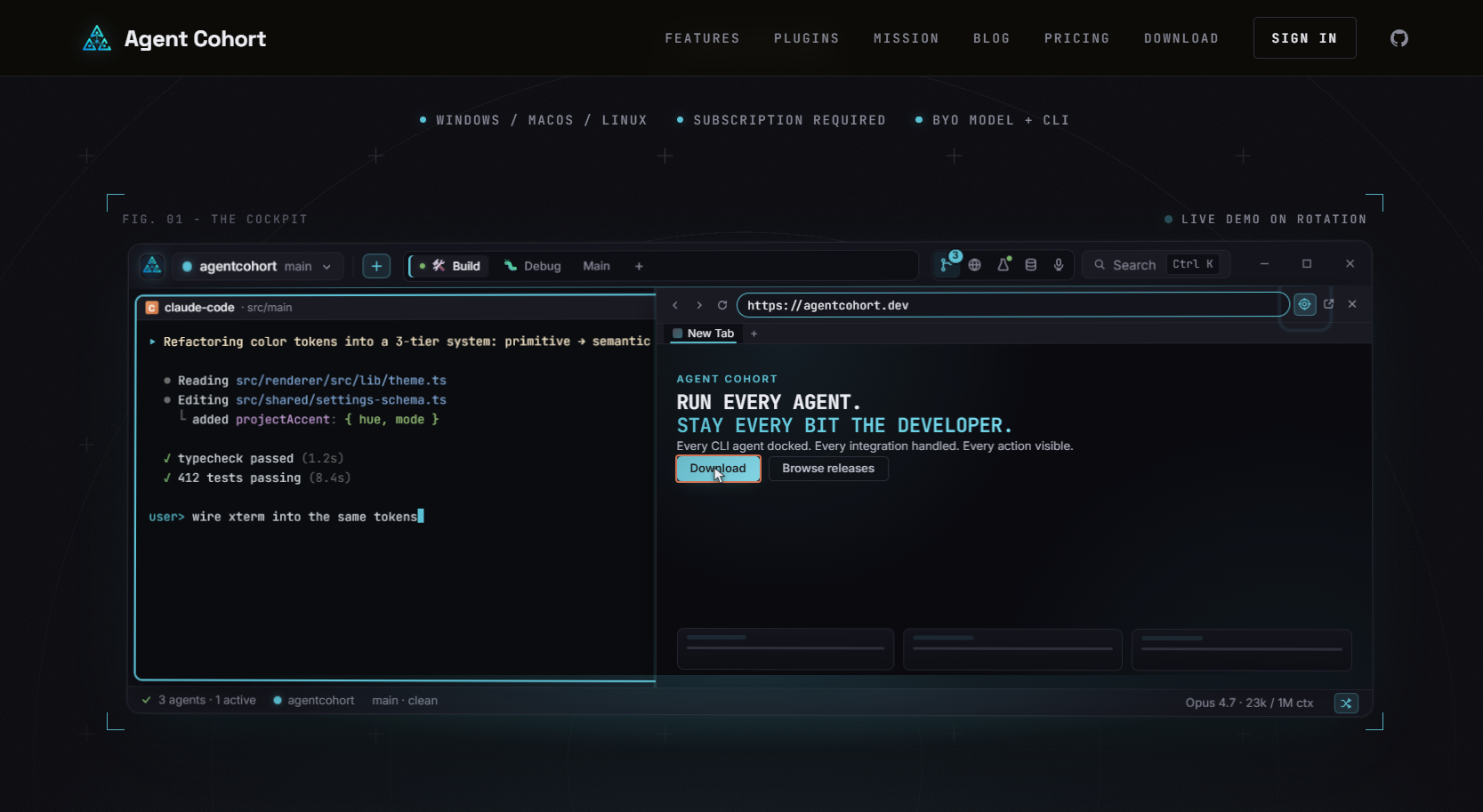
Agentcohort provides a multi-agent developer workspace that integrates AI agents including Claude Code and OpenAI Codex into a single, project-scoped environment. Each project gets its own terminal grid, its own session context, and its own authentication handling. That architecture mirrors the modular, isolated design pattern this article describes. Teams get visibility and control over every agent action without managing the underlying infrastructure themselves. Agentcohort handles installations and authentication automatically, so your team focuses on shipping features, not configuring pipelines.
FAQ
What is shadow deployment in AI integration?
Shadow deployment duplicates live production traffic to a candidate AI agent without exposing its responses to users. It lets teams validate agent behavior under real conditions before any user impact occurs.
How long should the shadow phase last before a canary release?
The minimum shadow phase is 1,000 production requests or five days of traffic comparison, whichever is longer. Canary releases then start at 5% traffic with continuous KPI monitoring.
Why should AI logic be centralized in a single service?
Centralizing AI calls in a dedicated gateway enables fallback routing, retry policies, and cost tracking without modifying business logic. It also allows instant model or provider swaps without a full redeployment.
What authentication standard should AI agents use for enterprise data access?
OAuth Protected Resource Metadata (PRM) per RFC 9728 is the current industry standard. It standardizes agent authentication and eliminates brittle custom token flows that cause integration failures.
What metrics indicate a successful AI integration rollout?
CSAT scores, escalation rates, and error rates are the primary indicators during shadow and canary phases. Divergence metrics between shadow and production agents confirm readiness before expanding traffic.