Finding a multi-agent management platform that balances agent auditability, governance, and deployment flexibility remains a pain for enterprise AI teams. Most tools lock core compliance features behind enterprise-only pricing or require heavy customization before you ever ship an agent to production. This comparison makes it possible to trade off governance, deployment options, and onboarding complexity across four Xeris.ai competitors before the next pilot budget cycle.
Table of Contents
Agent Cohort
At a Glance
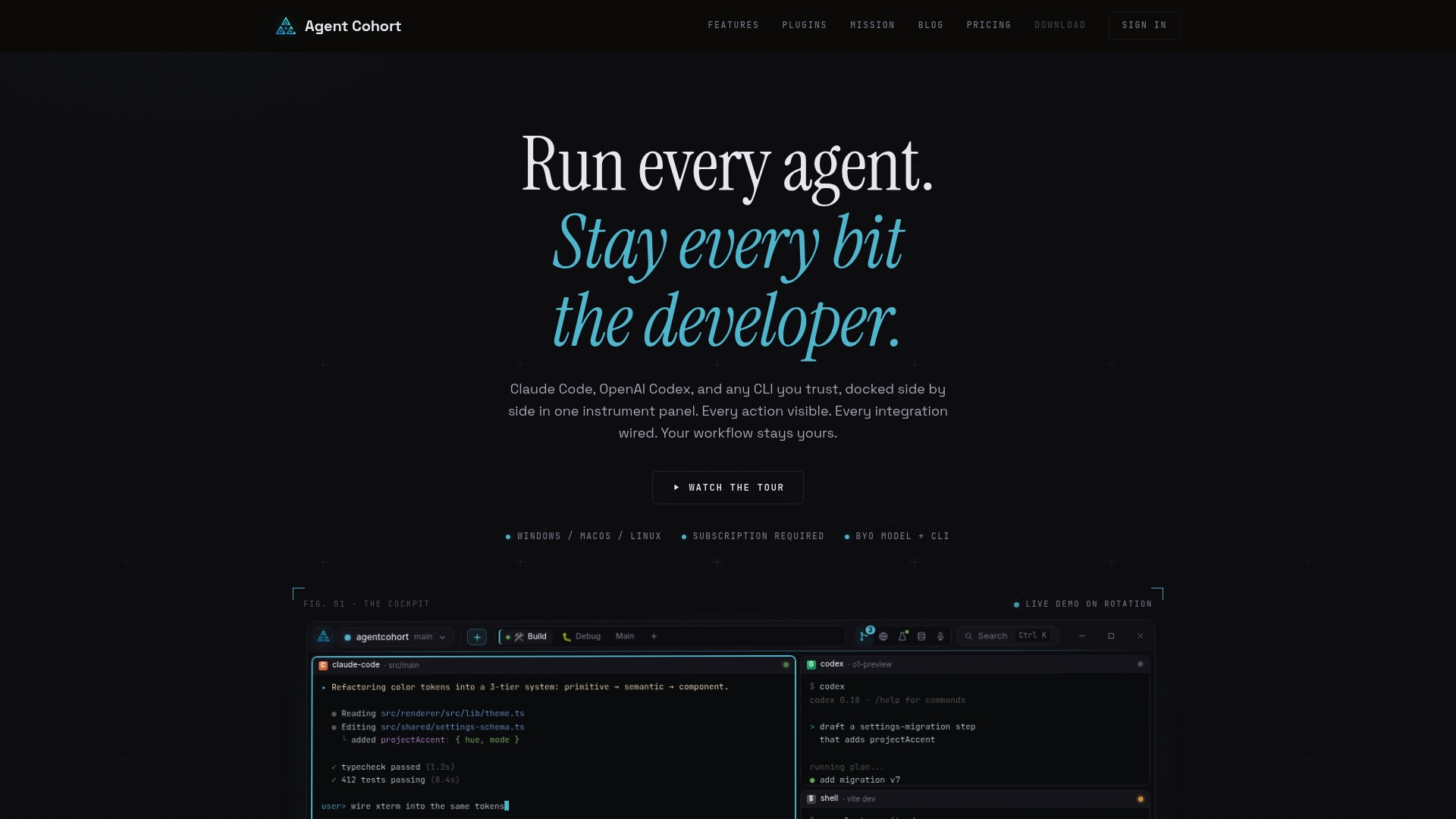
A multi terminal grid gives each project its own dedicated workspace and preserves terminal sessions across restarts. The platform supports Claude Code and OpenAI Codex alongside custom CLI agents for live coding and automation. The vendor advertises a 30% launch discount for waitlist members.
Core Features
Agent Cohort centers on a multi terminal grid with freeform layouts and persistent project workspaces so you can return to the same state later. It supports multiple agent types, a plugin architecture for browser, cloud, and version control integrations, and shared allow lists with audit trail features for team oversight. The app stays lightweight by loading only essential features and offers cross platform installers for Windows, macOS, and Linux.
Key Differentiator
Built for team workflows with full visibility and plugin modularity, Agent Cohort focuses on controlling agent actions inside real codebases. Each project runs in its own environment so teams can apply per project policies and review agent activity in an audit log. That emphasis on oversight and modular plugins separates it from single terminal agent wrappers.
Pros
Agent Cohort gives teams explicit control over what agents can do and keeps a traceable audit trail for review and compliance. Shared policies and per project allow lists make collaboration safer while session persistence prevents lost context during long tasks. Plugin support and the minimal base app let teams add only the integrations they need, and installers for the three major desktop platforms simplify onboarding for distributed development teams.
Cons
- Pricing and plan details are not finalized, which makes budget planning harder for teams evaluating migration or long term adoption.
Who It's For
Teams and developers who run multiple AI assistants inside active repositories and need visibility into agent actions will benefit most. This fits engineering teams that require per project governance, auditability, and cross platform desktop tooling. Solo developers who want a minimal local workspace will find value if they accept an early access product.
Unique Value Proposition
Automatic handling of setup tasks such as installations and authentication reduces manual configuration overhead for teams. That hands off routine environment plumbing and keeps focus on development rather than agent onboarding. For teams, this lowers the operational cost of introducing many agent types into existing CI and deployment flows.
Real World Use Case
A backend team runs separate agents for code review, doc generation, and deployment tasks inside dedicated project terminals. They apply shared allow lists to block risky operations and use the audit trail to trace agent changes during incident postmortems. Session persistence saves reviewers from rebuilding state when switching between tasks.
Pricing
Pricing is not yet published and the vendor still finalizing plans. Early access may include promotional waitlist pricing, and that launch discount was advertised above. Teams should factor uncertain pricing into rollout schedules and pilot budgets.
Website: https://agentcohort.ai
CrewAI
At a Glance
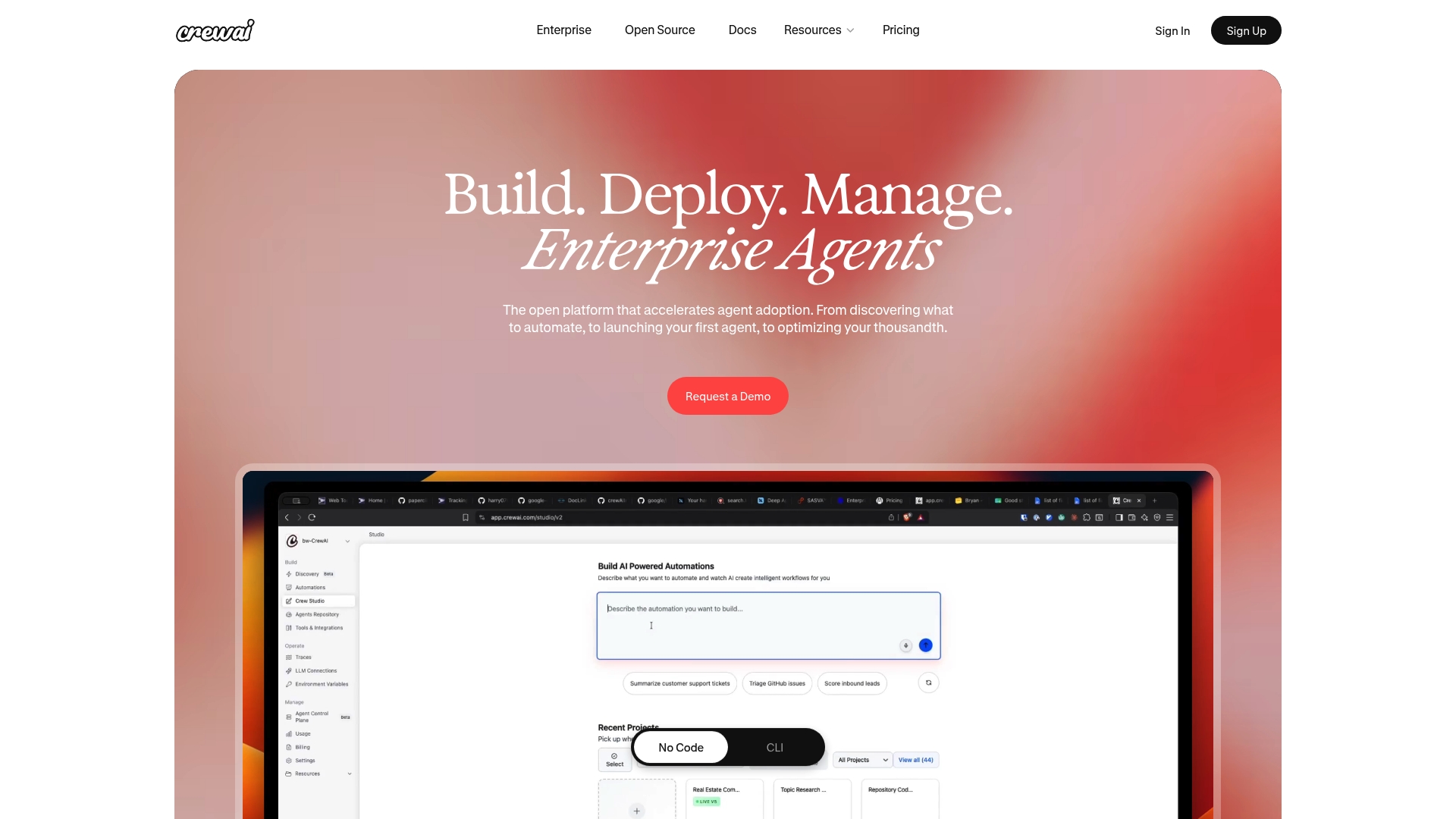
CrewAI's marketing materials state 63% of the Fortune 500 use the platform. That claim highlights the vendor focus on large enterprise adoption. The product also offers an open-source edition for teams that need transparency and customization.
Core Features
CrewAI combines discovery tools that the vendor advertises as driven by billions of agent runs with a no-code visual workflow editor that exports to Python. The platform includes role based agent orchestration and production governance with observability and cost tracking. Continuous training, integrated evaluation, and model swapping complete the toolset for running agents at scale.
Key Differentiator
The single standout is the pairing of an open-source foundation with enterprise control features. This design lets teams reuse community code while keeping visibility with tracing and role based access. For organizations that must audit agent behavior, that combination is the main appeal.
Pros
CrewAI targets enterprise needs with governance features that cover tracing, compliance, and cost tracking. It supports both visual no-code flows and code exports, so developer teams can iterate in Python after a designer builds the flow. The open-source edition lowers customization friction and the vendor supplies automation blueprints to shorten deployment time.
Cons
- Complexity can be high for teams new to multi agent orchestration, according to third party reviews.
- Pricing is tailored to enterprise, which may limit access for smaller teams or pilots.
- Effective use often requires dedicated training and onboarding resources.
When It May Not Fit
Small teams without a dedicated SRE or ML operations engineer will likely struggle with the platform's operational surface. Organizations running short pilots may find the enterprise pricing structure restrictive. Projects that need a simple single agent solution will get more value from lighter tools.
Who It's For
This product fits large enterprises and AI teams building multi agent systems that must run in production under strict controls. Pick CrewAI if you need role based governance, real time tracing, and the option to inspect or adapt open source agents. It suits teams that can invest in onboarding and operations.
Real World Use Case
A Fortune 500 company used CrewAI to locate automation opportunities across internal workflows and deploy multi agent systems for customer support. The team applied the governance features to meet compliance requirements while swapping models during testing. That example shows how the platform supports regulated production deployments.
Pricing
The vendor lists a Basic free plan and an Enterprise plan with custom pricing. Pricing details beyond those tiers are handled via sales discussions for enterprise accounts.
Website: https://crewai.com
Phinite
At a Glance
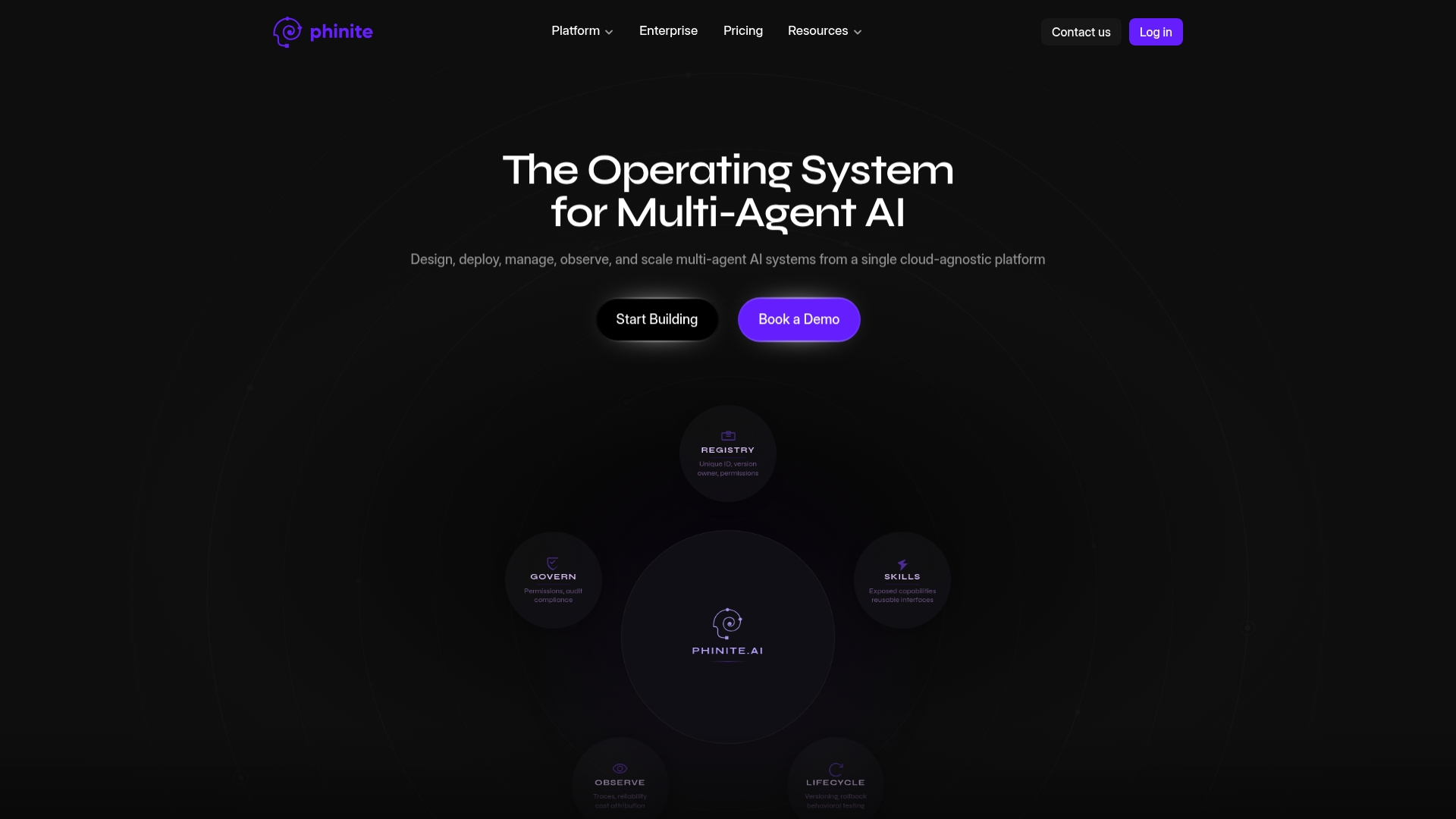
Phinite surfaces real time observability and decision level tracing across multi agent deployments. Generation is solved. Verification is not. I have run agent stacks in production and the platform puts governance and auditability at the center of the lifecycle.
Core Features
Phinite combines lifecycle management, multi agent design, deployment, and monitoring into one environment. The platform includes decision tracing, centralized audit logs, and environment management with version control to track changes across releases. It also offers governance controls such as permissions and role based access for enterprise teams.
Key Differentiator
Phinite targets organizations that must run many cooperating agents while keeping every decision and tool call visible for audits. Its focus on governance across the entire lifecycle separates it from orchestration tools that only handle scheduling or message passing. The product is designed to enforce compliance and traceability while you scale agent fleets.
Pros
The unified approach reduces the number of bespoke scripts and glue services you normally build to coordinate agents. Strong governance features and role based permissions help satisfy audit and compliance requirements for regulated teams. Built in observability and version management make it easier to investigate incidents and roll back problematic agent changes.
Cons
- Setup and configuration are complex for small projects or teams with limited infrastructure expertise.
- Pricing targets large organizations and may be expensive for prototypes or single team pilots.
- Full value requires engineering resources to design agent workflows and maintain environments.
When It May Not Fit
If your project is an early prototype or a single agent proof of concept, the platform will add operational weight. Small teams without dedicated DevOps or ML engineering bandwidth will struggle to extract value quickly. Organizations seeking a lightweight managed workflow orchestrator will likely prefer simpler tools.
Who It's For
Phinite fits enterprise AI teams, platform engineers, and IT operations running many agents across departments. Choose it when you need audit logs, permissions, and policy controls as part of deployment. Pick this platform when governance and visibility matter as much as agent behavior.
Real World Use Case
A customer service organization uses Phinite to coordinate agents across chat, email, and voice channels. Engineers deploy agent versions with environment isolation and track decisions through the audit logs during compliance reviews. When an incident occurs they replay traces and roll back the offending version quickly.
Pricing
Phinite uses enterprise pricing and asks teams to contact sales for custom quotes. The vendor also offers a free tier for small scale testing and evaluation. Expect pricing to reflect enterprise support, governance features, and custom deployment options.
Website: https://phinite.ai
Inkeep
At a Glance
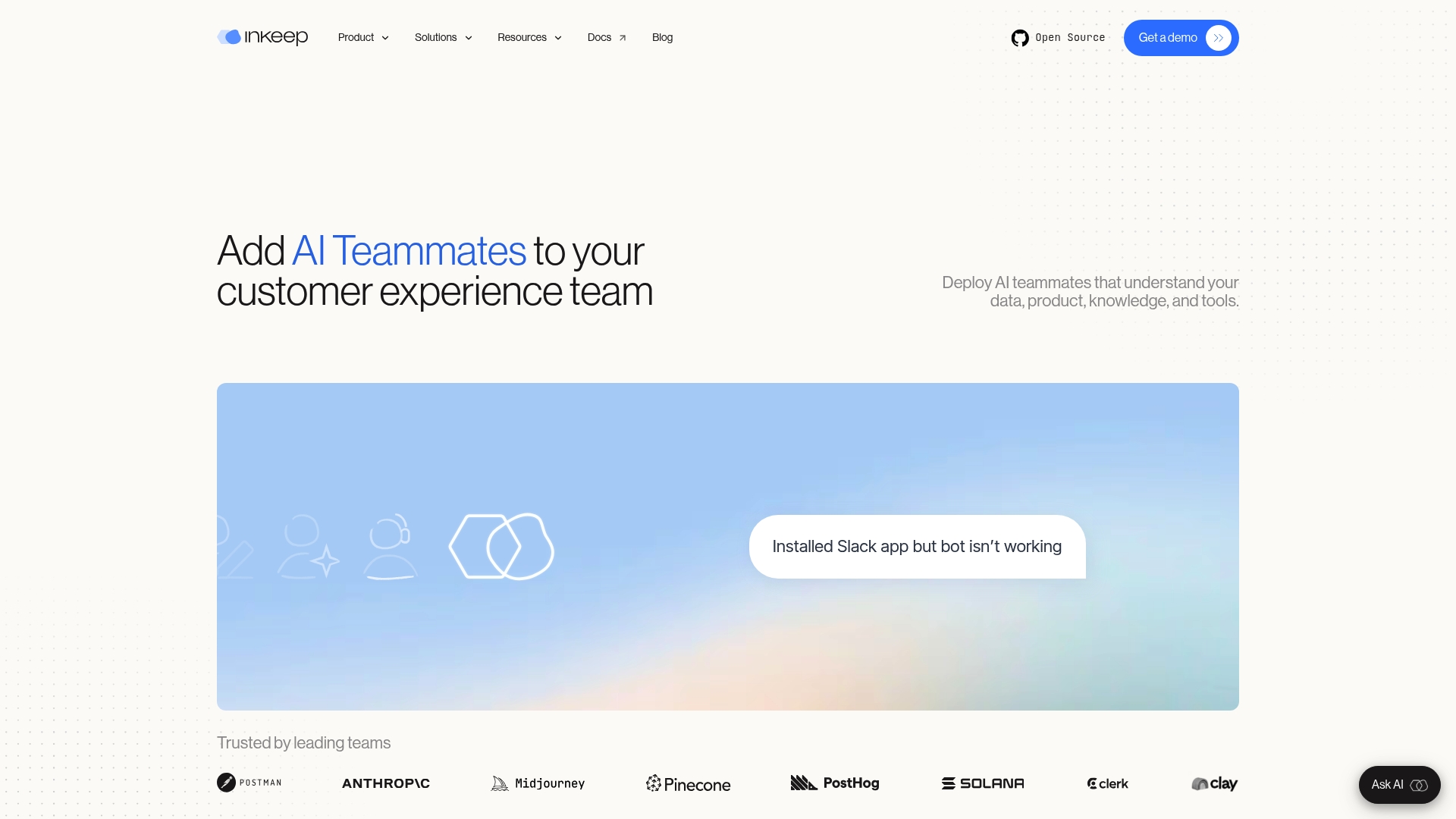
Two way sync between a visual builder and TypeScript lets engineers and nonengineers work on the same agent without losing changes. Inkeep combines a no code visual builder with a TypeScript SDK and multiagent support. The platform also offers cloud, hybrid, and self hosted deployment options along with SSO and role based access.
Core Features
A no code visual builder pairs with a TypeScript SDK and two way sync so teams can prototype in the UI and then refine behavior in code. The system runs multiple agents, pulls real time data from databases and APIs, ingests documentation automatically, and applies advanced retrieval augmented generation for more accurate responses. Enterprise controls include secure credentials, role based access control, traces surfaced in the UI and OTEL, PII removal, compliance support, and several hosting choices plus dedicated deployment services.
Key Differentiator
Generation is solved. Verification is not. Inkeep focuses on making agent behavior auditable while supporting both no code and SDK workflows. That combination reduces the friction between product, support, and engineering teams when they ship customer facing agents. The emphasis on traces, RBAC, and hosting flexibility makes it more suitable for regulated or large organizations than for lightweight chat widgets.
Pros
Inkeep offers flexible deployment choices that let teams choose cloud, hybrid, or self hosted setups, which helps when data residency matters. The platform centers security and compliance with features for secure agent credentials, PII removal, SSO, and role based controls. Integrations with Slack and common support platforms plus the ability to ingest documentation reduce custom glue work. Finally, the dual no code and developer path lets support teams iterate quickly while engineers keep full control of SDK customizations.
Cons
-
Complex enterprise features may require dedicated support and onboarding. This raises the initial project cost and calendar time.
-
Advanced customization and integrations have a learning curve for nontechnical users. Expect engineering involvement for deep CRM or API work.
-
Pricing details are not publicly listed. Teams must contact sales for a custom quote and demo.
-
The platform’s scope and enterprise focus may exceed the needs of small support teams or solo operators.
When It May Not Fit
If your team lacks engineering bandwidth, the integration and customization work can slow adoption. Small startups that need an out of the box, low cost chatbot will find Inkeep heavyweight. Organizations that require transparent, fixed pricing up front may prefer alternatives with published tiered plans. If you need a basic FAQ bot without enterprise controls, this product will feel like overkill.
Who It's For
Large customer experience, support, and operations teams that must run AI agents under strict security and compliance rules will get the most value. Teams that mix product, support, and engineering roles and need both no code iteration and SDK level control will benefit. This product suits organizations that plan for multiagent deployments and long term maintenance.
Real World Use Case
The vendor describes a SaaS company that deployed Inkeep agents integrated with Slack and their CRM. The agents automated common support answers, guided agents using internal knowledge, and analyzed tickets to identify knowledge gaps. The vendor says the deployment reduced support ticket volume and improved customer satisfaction.
Pricing
Pricing is not specified publicly and appears to follow an enterprise sales model. Expect custom quotes and demos for procurement, with dedicated support and deployment services offered to match larger contracts. Small teams should budget for onboarding and potential engineering time.
Website: https://inkeep.com
Comparison of Alternatives
Agent Cohort's modular design and plugin architecture ensure enhanced flexibility for teams operating across projects and platforms. While each alternative delivers valuable features, differences in scalability, governance, and deployment suitability reveal tradeoffs based on user needs.
Adaptability in Collaborative Team Environments
Agent Cohort prioritizes team-oriented workflows with modular plugins and persistent workspace management. Its ability to maintain state continuity through grid sessions benefits teams juggling multiple projects. CrewAI, meanwhile, excels in enterprise-scaled governance and the open-source community foundation but demands extensive onboarding protocols. Phinite emphasizes lifecycle visibility paired with granular control, suitable for operations requiring detailed traceability. Conversely, Inkeep delivers integration flexibility through visual and SDK collaboration, fitting organizations with mixed technical capabilities and enterprise-level security concerns.
Governance and Scalability Tradeoffs
Both CrewAI and Phinite outperform Agent Cohort concerning governance features. CrewAI offers in-depth tracing for compliance purposes, leveraging billions of existing run data points. In contrast, Phinite ensures decision-level tracking integrated with centralized audit trails for operating at scale across departments. Inkeep matches its enterprise clientele by offering deployment services combining cloud-hosting flexibility with regulatory compliance instrumentation. While Agent Cohort provides approachable governance for developers, it lacks customization depth seen in governance-oriented platforms.
Best Fit
- Teams managing diverse projects requiring modular workspace control gain enhanced productivity leveraging Agent Cohort's multi-terminal grid.
- Enterprises focusing on compliance, governance, and community-driven adaptivity while aiming for code transparency align best with CrewAI.
- Large organizations seeking lifecycle integration within their operational structures, prioritizing traceability, benefit from Phinite's audit capabilities.
- Customer experience and SaaS teams managing dual-code and visual workflows would value Inkeep's SDK synchronization alongside accessible compliance tools.
Our Pick
Agent Cohort stands apart by combining modular plugin customization with persistent multi-project grid management. Teams needing oversight, state continuity, and accessible infrastructures thrive under its cross-platform ecosystem for development tasks. However, enterprises prioritizing governance depth or open-source flexibility may consider CrewAI or Phinite as better-suited alternatives.
When selecting multi-agent management software, consider the following options based on their distinct features and suitability for various teams and projects.
| Product | Primary Feature | Unique Advantage | Best For | Pricing | Limitation |
|---|---|---|---|---|---|
| Agentcohort | Multi-terminal grid with persistence | Modular plugin support for oversight | Teams requiring per-project governance | Price not published | Pricing details are not finalized |
| CrewAI | No-code visual workflow editor | Open-source base with enterprise controls | Enterprises needing role-based governance | Free basic; custom | Complexity requires dedicated training |
| Phinite | Decision-level auditability | Lifecycle-focused governance | Regulated teams scaling multi-agent fleets | Enterprise pricing | Setup complexity impacts smaller projects |
| Inkeep | Visual builder with TypeScript sync | Advanced compliance and security features | Large support/operations teams | Price not published | Requires engineering bandwidth |
What Happens When Managing Multiple AI Agents Feels Out of Control?
Many teams struggle with AI assistants scattered across different tools and projects. Session loss and unclear agent actions slow progress. A solution lies in a dedicated environment for every project, preserving work and ensuring full visibility. This is exactly where Agentcohort steps in.
Agentcohort offers a multi terminal grid tailored for teams needing per project governance and action auditability. It supports Claude Code, OpenAI Codex, and custom CLI agents, all in one developer workspace. Automatic setup and session persistence free you from manual overhead. Teams get control, collaboration safety, and smooth onboarding across Windows, macOS, and Linux.
See how Agentcohort keeps your AI agents organized and accountable and bring back clarity to your multi-agent workflows. Start by setting up your dedicated project environment today and maintain full traceability on all AI actions.
FAQ
What feature allows Agentcohort to manage project environments effectively?
Agentcohort's multi terminal grid allows each project to have its own dedicated workspace with persistent sessions. This setup lets teams return to the same state later, enhancing continuity and workflow over time.
How does Agentcohort compare to CrewAI in terms of governance features?
CrewAI emphasizes governance with compliance features like tracing and role-based access control, catering to large enterprises that need stringent oversight. Agentcohort, while also focusing on governance, excels at providing explicit control and audit trails within real codebases, ideal for teams that prioritize project oversight.
Can teams expect a simple onboarding process with Agentcohort?
Agentcohort maintains a lightweight app that focuses on essential features, making onboarding smoother for teams. The availability of cross-platform installers for Windows, macOS, and Linux further simplifies the integration experience.
What pricing challenges do teams face when evaluating Agentcohort?
Agentcohort's pricing and plan details are not yet finalized, which poses challenges for budget planning. Teams should factor this uncertainty into their rollout schedules and pilot budgets.
How does Agentcohort facilitate collaboration among teams?
Agentcohort uses shared allow lists with audit trails to make collaboration safer, allowing teams to manage permissions effectively. This ensures that oversight is maintained while teams can work together efficiently.